
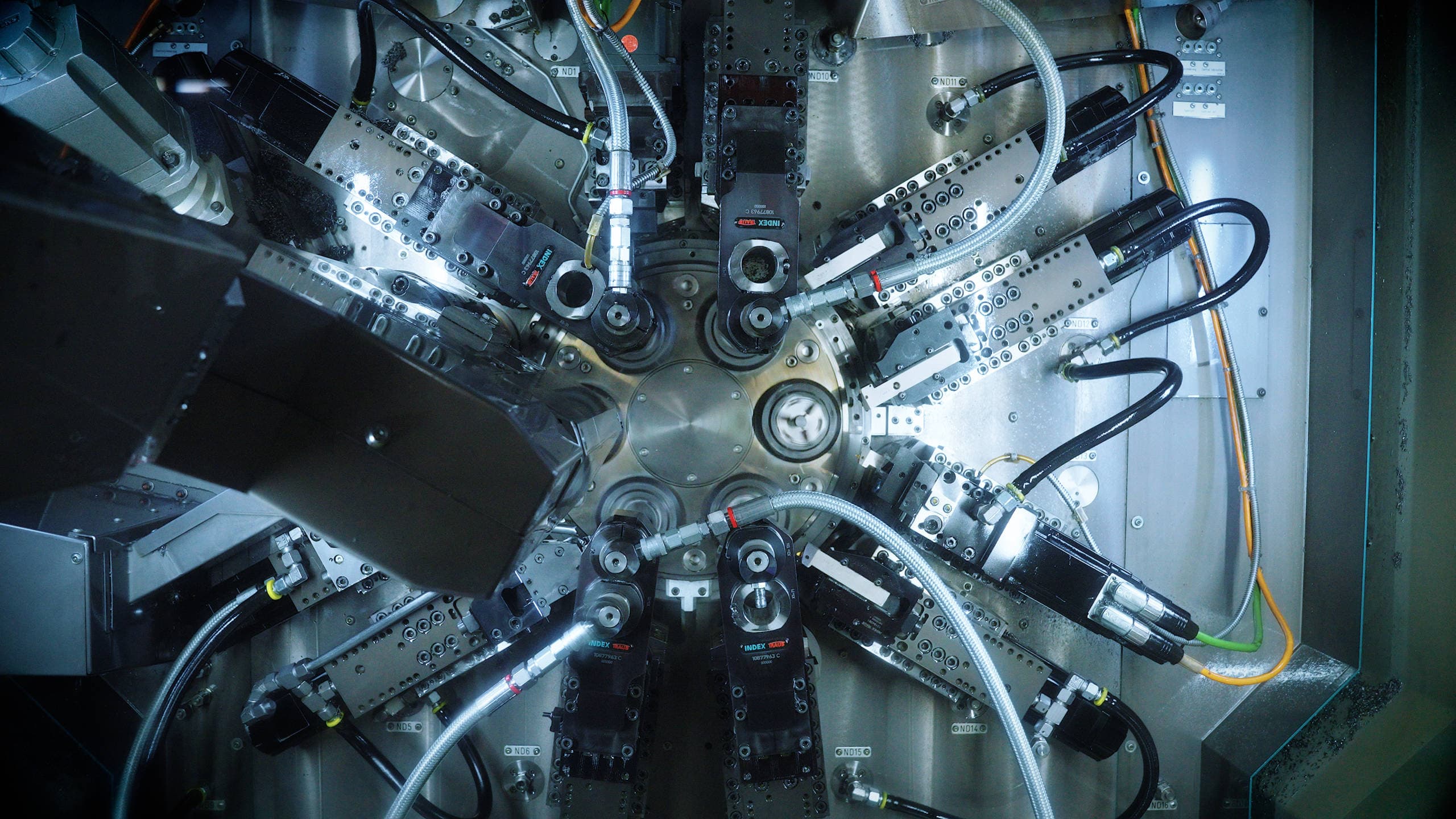
CNC Turning
Precision CNC Turning Services
Subcontract CNC turning for UK manufacturers, engineers and procurement teams who need dependable precision production — from development quantities through to scheduled volume supply.
Process choice
Which CNC turning route fits the drawing?
Unicut Precision is a UK subcontract manufacturer of CNC turned and milled components, based in Welwyn Garden City and established in 1990. Turning work is planned around the part — geometry, material, quantity and call-off — rather than a single machine type.
Three turning routes are available: Miyano fixed-head mill-turn, Citizen sliding-head cells, and Index MS40 multi-spindle production. The notes below are for engineering and procurement teams comparing those routes. Model lists, bar capacities and turret details sit on the plant list; 5-axis milling, assembly and the full materials list sit on the capabilities overview.
- Fixed-head mill-turnUse when the component needs mill-turn features, simultaneous front and back-end machining, or the rigidity of a fixed-head centre.
- Sliding-head turningUse for simple or complex turned work that benefits from size-specific cells, multi-axis sliding-head capability, and flexible batch size including JIT.
- Multi-spindle turningUse when the programme needs high-quality turned components at scale, and geometry suits the Index MS40’s CNC multi-spindle process.
01 — Fixed Head
Fixed-head CNC turning and mill-turn centres
Fixed-head mill-turn is the usual Unicut route for complex prismatic turned components — parts that combine turned diameters with milled features, or that need front and back-end work in a controlled mill-turn setup.
Engineering and procurement teams typically raise mill-turn when drawings show shoulders, bores, cross-holes or prismatic details that a sliding-head cell is not the first fit for, and when process rigidity matters as much as cycle time. Unicut machines this work on Miyano mill-turn centres; individual models and bar capacities are on the plant list.
02 — Sliding Head
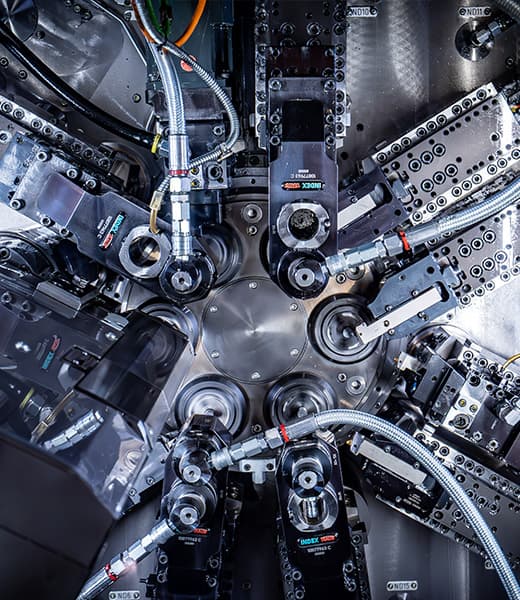
Sliding-head CNC turning
Sliding-head turning suits both simple and intricate turned components where bar-fed, multi-axis work is the efficient process. Unicut groups Citizen sliding-head centres in size-specific cells so similar diameters can be scheduled together, including Just-in-Time call-off.
This is often the first discussion for small-diameter turned hardware, development quantities that may later grow, and mixed-volume programmes that need cell flexibility rather than a dedicated multi-spindle process. Confirm the cell against the drawing; machine models are listed on the plant list.
03 — Multi-Spindle
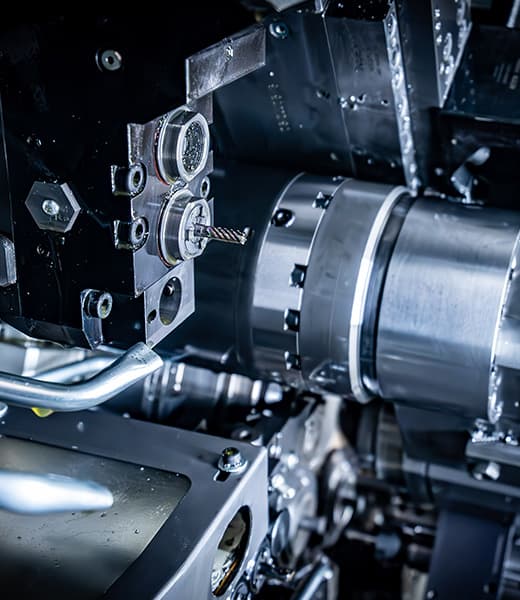
Multi-spindle CNC turning
Multi-spindle turning is Unicut’s route when a turned family of parts needs volume without giving up CNC control. The Index MS40 is used for both simple and complex geometries once geometry and demand justify that process.
Procurement teams usually consider this cell when forecast volumes, repeatability and bar-fed output matter more than sliding-head flexibility. Moving a part from sliding-head or mill-turn onto multi-spindle is a planned decision with the customer, not an automatic step.
04 — Materials
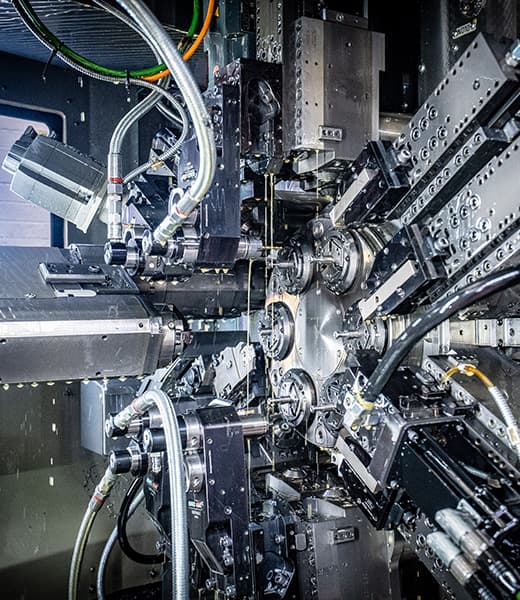
Materials for CNC turning
CNC turning is planned against the same published materials Unicut machines across turning and milling — including aluminium, steels and stainless grades, titanium, copper alloys, nickel alloys and engineering plastics. Suitability for a specific turned part is confirmed from the drawing.
05 — Applications
Precision turned components and industry applications
Unicut manufactures high-precision CNC turned and milled components for sectors where quality, reliability and repeatability matter. Turning is selected where the geometry, material and volume suit a mill-turn, sliding-head or multi-spindle route.
- AerospaceMill-turn, sliding-head and multi-spindle routes aligned to aerospace geometry and schedule.
- AutomotiveSliding-head, mill-turn and MS40 options for programmes that mix complexity and volume.
- MedicalSliding-head flexibility for development quantities, with mill-turn or multi-spindle as demand grows.
- DefenceFixed-head and multi-spindle turning alongside accredited quality systems for defence components.
- Electrical & TelecomSliding-head and mill-turn for electronics hardware; multi-spindle where volume justifies it.
- HydraulicsMill-turn, sliding-head and MS40 options for high-precision hydraulic components.
06 — Quality
Quality assurance and inspection
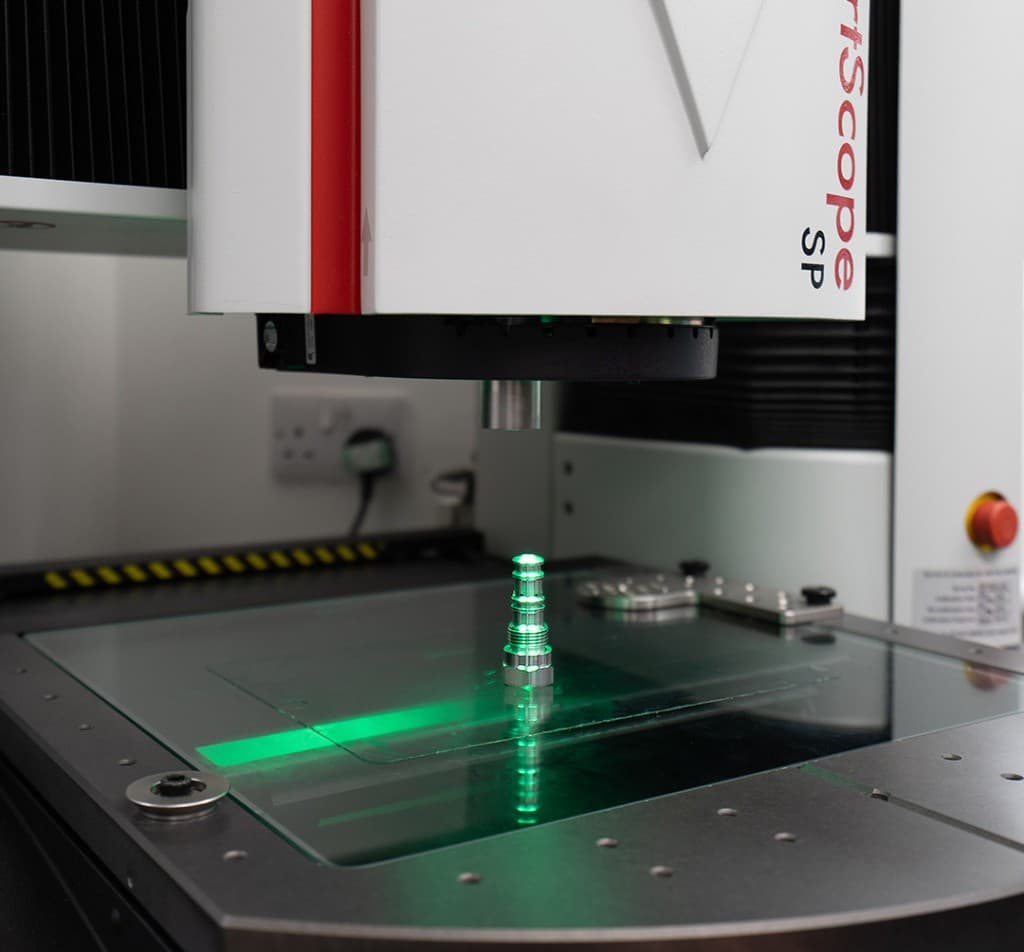
CNC turning is produced under Unicut’s quality management system, operated in compliance with BSI EN 9100 and ISO 9001, with JOSCAR registration among the published assurance marks. Inspection is supported by a temperature-controlled metrology department.
Equipment, methods and the full accreditation set are described on the quality page — not restated here. Send inspection requirements with the enquiry so the route and verification plan can be discussed together.
07 — Volume & Supply
Low- and high-volume CNC turning, including JIT and Kanban
Sliding-head cells support small, medium and larger batch runs. Multi-spindle is used where geometry and demand justify the MS40. Unicut does not publish standard batch sizes, lead times or a minimum order quantity; those are agreed against drawings, material and schedule.
Just-in-Time, Kanban and consignment stock (held at the customer or at Unicut against agreed min/max levels) are available as supply methods. The capabilities page covers how those programmes are set up.

Questions
CNC turning FAQs
How do I know whether mill-turn, sliding-head or multi-spindle is right for my part?
Share the drawing, material, quantities and any call-off pattern. Mill-turn is typically discussed for complex prismatic turned parts and front/back mill-turn work; sliding-head for bar-fed simple or intricate turned components in size-specific cells; multi-spindle when volume and geometry suit the Index MS40. Unicut advises the route rather than quoting a generic process.
What should I send to request a CNC turning quotation?
Drawings (including tolerances and datums), material, estimated quantities, any inspection or packaging requirements, and target schedule if known. Unicut manufactures in Welwyn Garden City. Lead times are not published as a standard figure.
Can Unicut support both prototype or low-volume turning and ongoing production?
Yes. Sliding-head cells are organised for low- and high-volume runs. Multi-spindle is considered when a proven turned part needs scale. JIT, Kanban and consignment stock can support ongoing supply. There is no published minimum order quantity.
Where are machine specifications and quality accreditations documented?
The plant list records turning and milling machines, quantities and published capacities. The quality page covers BSI EN 9100, ISO 9001, JOSCAR and inspection systems. The capabilities overview holds mill-turn, sliding-head and MS40 specification summaries plus milling, assembly and materials.
What if the job also needs milling, assembly or a special material?
5-axis milling, clean-room assembly (including leak testing where required) and the published materials list are on the CNC machining capabilities page. Turning programmes can sit alongside those services when the drawing requires it.
Next step
Discuss your CNC turning requirement
Share drawings, materials and volumes. Unicut will advise on mill-turn, sliding-head or multi-spindle routes and how inspection and supply can support the programme.