
Automotive Manufacturing
Precision CNC Machining for Automotive
Automotive manufacturers need components that perform reliably under competitive cost, quality and delivery pressure. Unicut supports that demand with production-focused CNC capacity and supply programmes built around real manufacturing schedules.
Industry Overview
Supporting Automotive Manufacturers with Production-Ready Machining
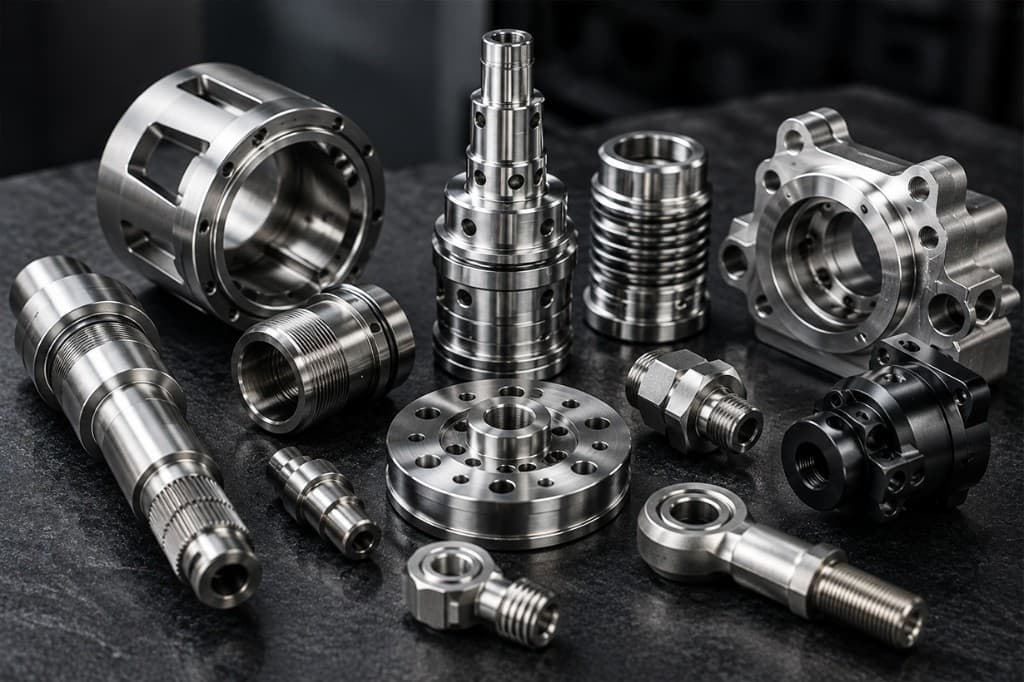
At Unicut, we support leading UK and global car manufacturers with precision-engineered components, helping them achieve optimal performance and reliability in the highly competitive automotive industry. That support means matching process capability to drawing intent, then sustaining output with the scheduling discipline automotive supply chains require.
Whether the requirement is a complex mill-turned feature set or a high-volume turned family of parts, production planning starts with the right machine cell. Size-specific sliding head cells, fixed head mill-turn centres and multi-spindle platforms give us routes for both intricate geometries and scale. 5-axis milling covers prismatic bodies and fixtures when milling is the dominant process.
Sector Requirements
Manufacturing Demands in Automotive
Volume Flexibility
Volumes rise and fall, revisions arrive mid-life, and delivery windows tighten — plant investment is organised to absorb that variability.
Cell Selection
Sliding head cells, fixed head mill-turn centres and multi-spindle platforms give routes for both intricate geometries and scale.
Reliability
Dimensional control and delivery discipline move together across capable machines, organised cells and real call-off methods.
Automotive programmes rarely stand still. Volumes rise and fall, revisions arrive mid-life, and delivery windows tighten around plant shutdowns or launch dates. Unicut’s plant investment — including Miyano mill-turn, Citizen sliding head, Index MS40 multi-spindle and Mazak VARIAXIS milling — is organised to absorb that variability without treating every job as a special exception.
Precision-engineered automotive components succeed when dimensional control and delivery discipline move together. Unicut’s reputation for reliability across sectors, including blue-chip supply relationships, is built on that combination: capable machines, organised cells and supply methods that match how customers actually call parts off.
Key Capabilities
Processes Supporting Automotive
At Unicut, we support leading UK and global car manufacturers with precision-engineered components, helping them achieve optimal performance and reliability in the highly competitive automotive industry.
Quality & Assurance
Inspection Discipline for Automotive Production
Precision-engineered automotive components succeed when dimensional control and delivery discipline move together. Unicut’s reputation for reliability across sectors is built on capable machines, organised cells and supply methods that match how customers actually call parts off — with an ISO 9001-backed inspection approach.
ISO 9001
Quality management supporting consistent inspection and process control for production programmes.
Process Control
Cell organisation and machine capability selected to protect dimensional consistency as volumes change.
Supply Discipline
JIT, Kanban and consignment options keep quality and delivery aligned to automotive call-offs.
Applications
From Prototype Batches to High-Volume Automotive Output
Automotive programmes often move from development quantities into sustained production. Our Citizen sliding head centres handle low and high-volume runs with the flexibility of multi-axis machining and driven tooling, while cell-based organisation supports Just-in-Time scheduling. Up to 13-axis capability, dual C-axis control and high-pressure coolant help maintain feature quality as batches grow.
For volume manufacture, the Index MS40 multi-spindle — with continuous Imeca bar loading and independently programmable spindles — delivers the combination of speed and CNC accuracy needed for consistent automotive components at scale. Temperature-controlled hydrostatic slides and a rigid Hirth coupling index drum support the repeatability high-volume programmes depend on.
Moving a part from sliding head or mill-turn onto multi-spindle is a deliberate decision based on geometry, volume and total cost of manufacture. Unicut reviews that transition with the customer so quality expectations remain clear as cycle times improve.
Mill-Turn Efficiency for Complex Features
Miyano fixed head mill-turn centres enable simultaneous machining with dual spindles and twin turrets. Superimposed cutting — enabling up to three tools to work at once — reduces cycle time on prismatic automotive parts that would otherwise need multiple setups, improving throughput without sacrificing control. Twin-turret capacity with driven tooling supports complex feature sets in a consolidated process flow.
Prismatic Work on 5-Axis Mazak Centres
Where milling dominates, Mazak VARIAXIS i-600 machines with 160-tool magazines, probing, laser tool measurement and Palletech pallet systems support efficient prismatic production and unattended running for suitable jobs. Zero-point fixtures keep changeovers practical when automotive part families share similar workholding.
Supply Chain
JIT, Kanban and Consignment for Automotive Lines
Timely delivery keeps vehicle and tier production moving. Unicut has long used Just-in-Time and Kanban methods so parts arrive when and where they are needed. Consignment stock, held to agreed min/max levels at the customer or at Unicut, helps protect floor space while buffering against schedule variation.
Materials commonly specified in automotive precision work from our machining range include Aluminium, Steel, Brass, Copper, Acetal, Delrin and martensitic stainless steel. We confirm material suitability against each drawing and discuss alternatives where appropriate. Engineering plastics and metals can sit in the same supply programme when a customer’s bill of materials requires both.
Assembly, bagging and packaging services are available when components need to leave Unicut as a ready-to-use kit or sub-assembly, reducing handling steps further down the supply chain. Clean room assembly supports full or sub-assembly work, with testing equipment available where calibration checks form part of the release plan.
For automotive buyers evaluating a new supplier, the useful conversation covers drawings, annual volumes, peak call-offs, packaging standards and any consignment preference. From that brief Unicut can propose a machining cell, an ISO 9001-backed inspection approach and a supply method that fits the production reality — not just the sample batch.
Ongoing investment in plant keeps Unicut’s CNC range current so automotive work benefits from modern capability rather than ageing equipment. That investment policy underpins dependable cycle times and the process stability competitive automotive supply expects over multi-year part lives.
Related Capabilities
Processes That Support This Sector
At Unicut, we support leading UK and global car manufacturers with precision-engineered components, helping them achieve optimal performance and reliability in the highly competitive automotive industry.
Other Industries
Explore Related Sectors
- AerospaceIn aerospace engineering, quality, safety and reliability are crucial. Clients demand high precision, rigorous testing, and consistent quality to ensure optimal performance and compliance with safety standards.
- HydraulicsHigh-precision hydraulic components engineered for reliability and consistent performance under pressure.
- Electrical & TelecomWe deliver exacting standards for the electronics and telecom sectors. Our clients rely on our micro-level accuracy and consistent quality to ensure their components and systems perform flawlessly in high-demand, fast-evolving environments.
Discuss Your Requirements
Plan automotive component supply with Unicut
Tell us about volumes, call-off patterns and drawings. We will recommend a machining and supply approach suited to automotive production.